Softruck: Tracking App Redesign
Client
Softruck
Year
2022
Services
Product Design
Mobile
Prototyping
Usability Testing
Context & Challenge
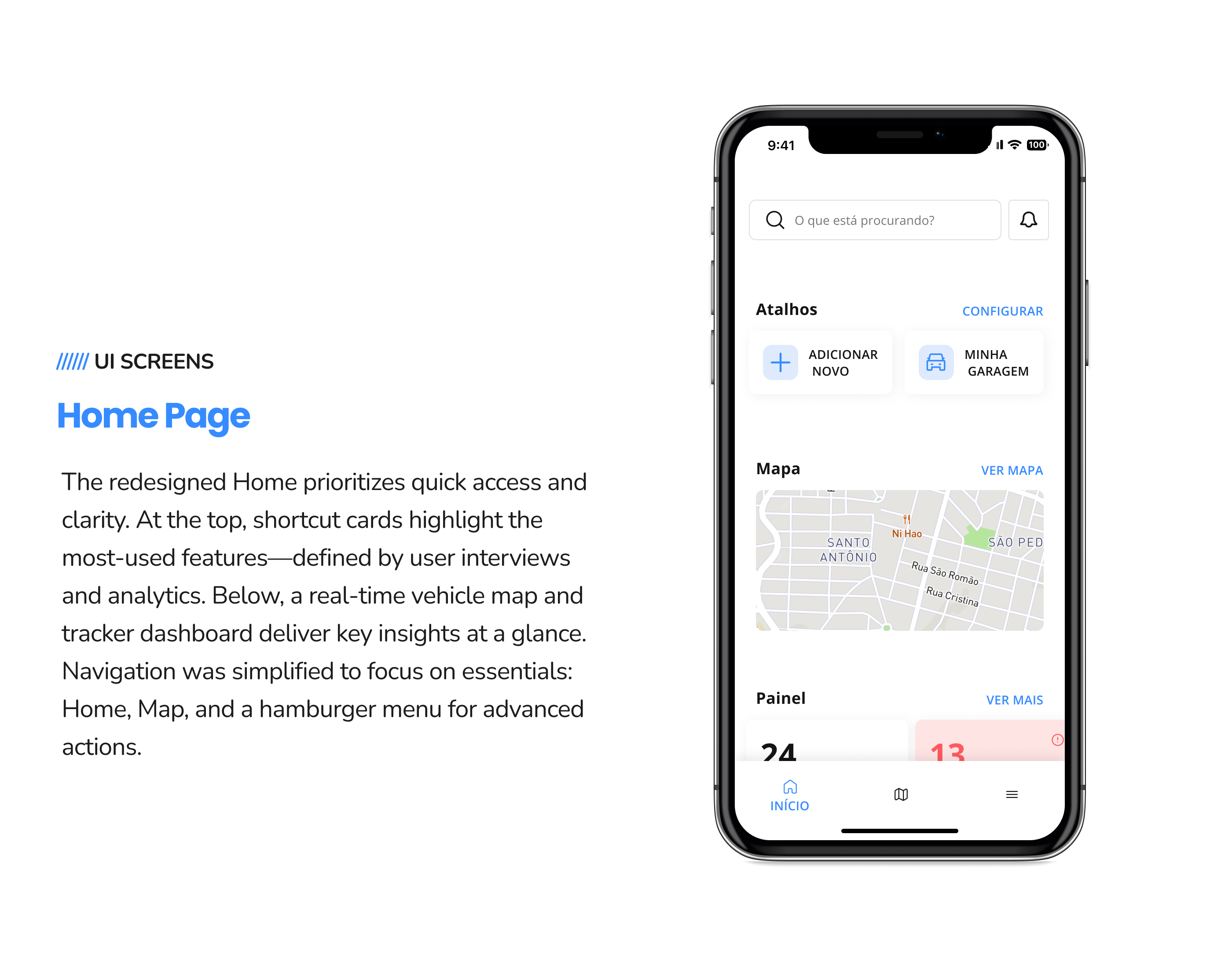
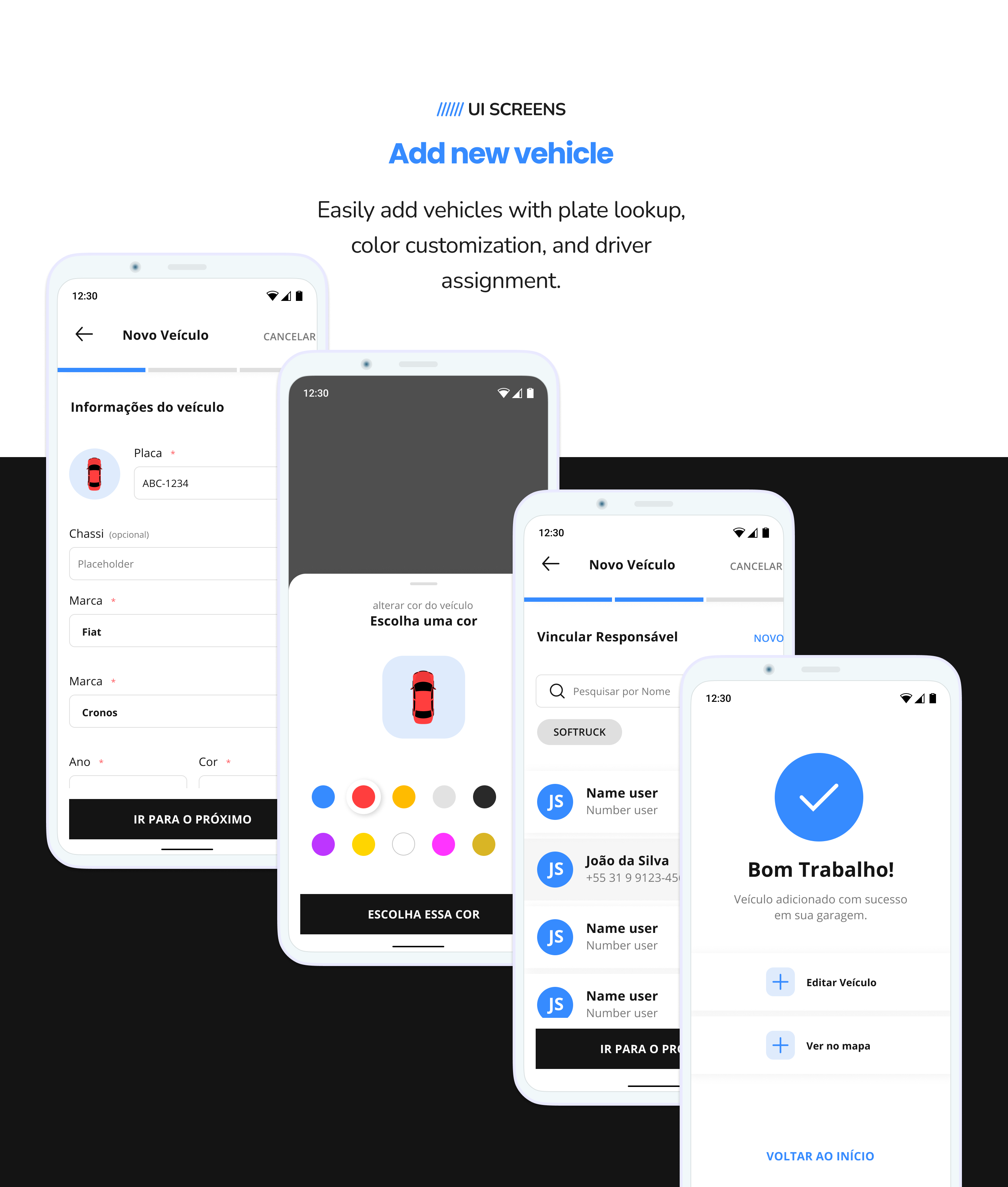
Softruck's vehicle tracking mobile app had grown organically over years, accumulating UX debt and an interface that confused more than it helped. Fleet managers and drivers needed to track vehicles, review routes, and manage alerts, but the existing app made simple tasks unnecessarily complex.
The challenge: a complete redesign that improved usability, modernized the visual language, and expanded the feature set, without breaking workflows that existing users depended on.
My Role
UX/UI Designer responsible for the full redesign: user research, information architecture, visual design, prototyping, and usability testing.
Process
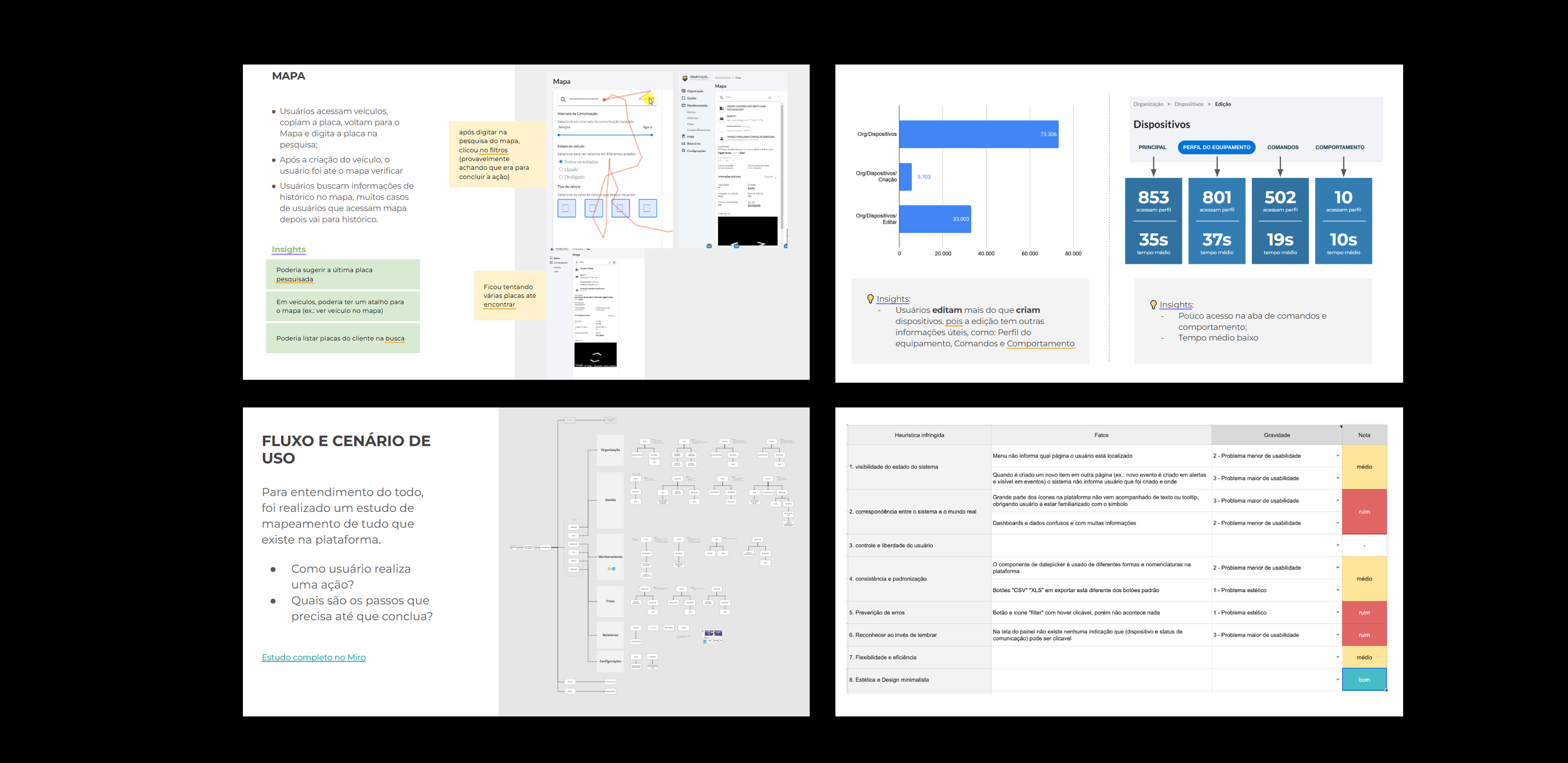
I started with user research: interviewing fleet managers and drivers to understand their daily workflows, pain points, and what "good enough" looked like for them (spoiler: the bar was low, which meant small improvements had outsized impact).
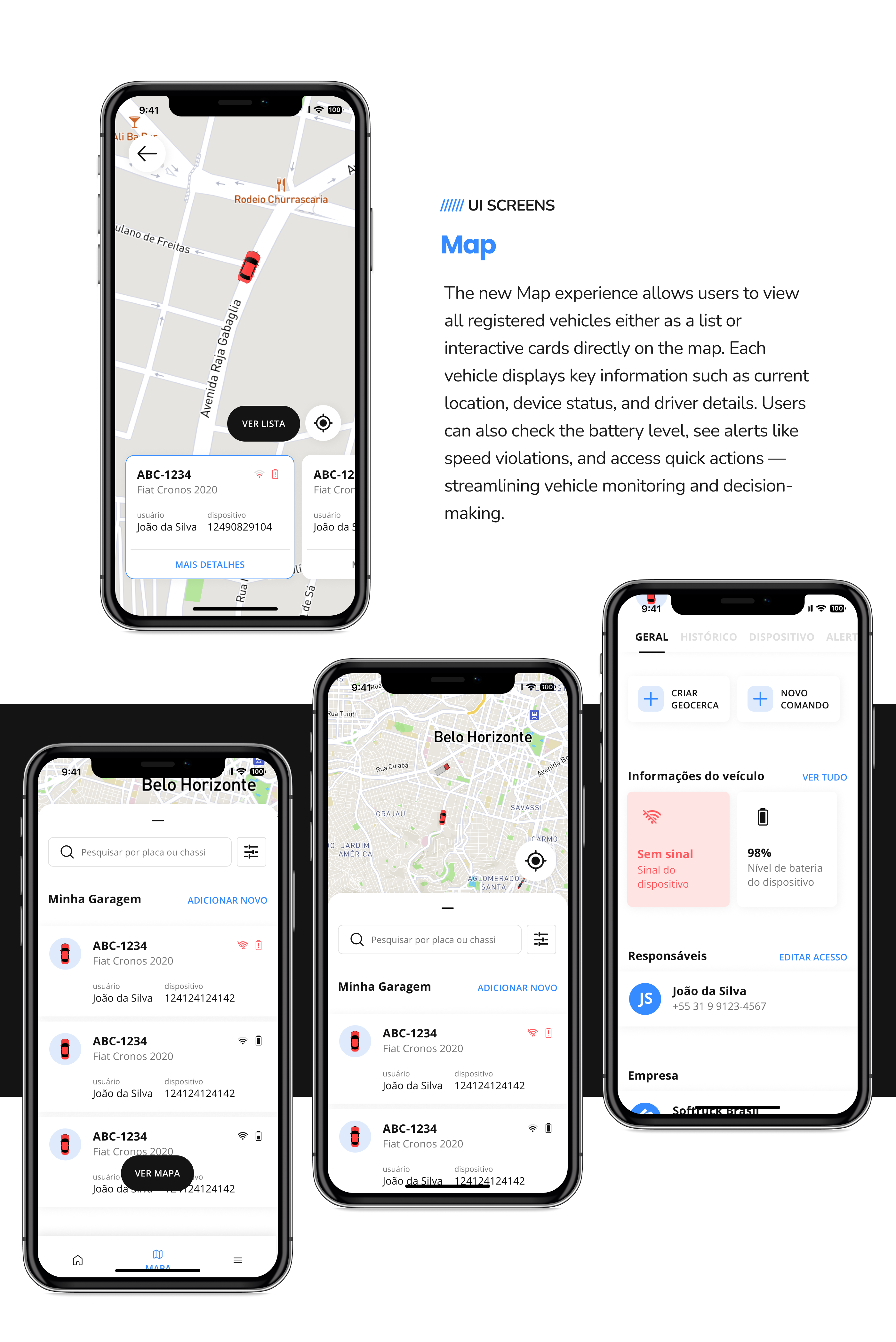
I restructured the information architecture based on task frequency: the things users do 10x/day should be 1 tap away, not buried in menus.
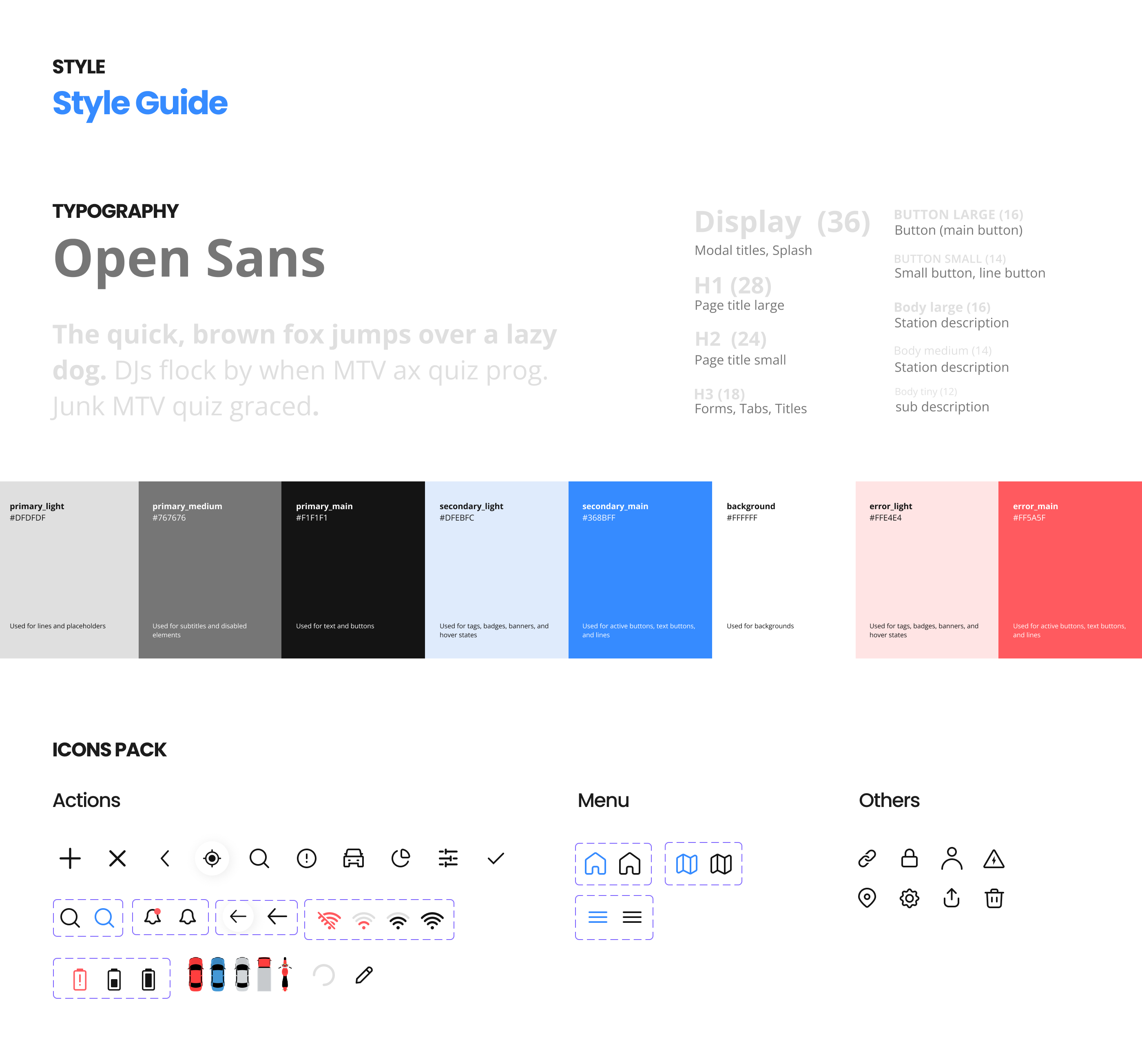
I designed a new visual system that prioritized readability in outdoor/vehicle conditions: high contrast, larger touch targets, simplified data visualization.
Prototyped key flows and ran usability tests with real users before development.
Key Decisions
Task-frequency-based navigation
reorganized the entire app structure around how often users perform each action. Daily tasks are front and center; weekly/monthly features are accessible but not competing for attention.
Designed for outdoor readability
high contrast ratios, larger touch targets, and simplified data displays, because most users are looking at this app in bright sunlight, often while moving.
Incremental rollout
released the redesign in phases to avoid disrupting established workflows. Each phase was validated before moving to the next.
Results
Complete visual and UX overhaul of the mobile tracking app
Improved usability scores across core workflows
Expanded feature set without increasing complexity
Positive reception from existing user base